
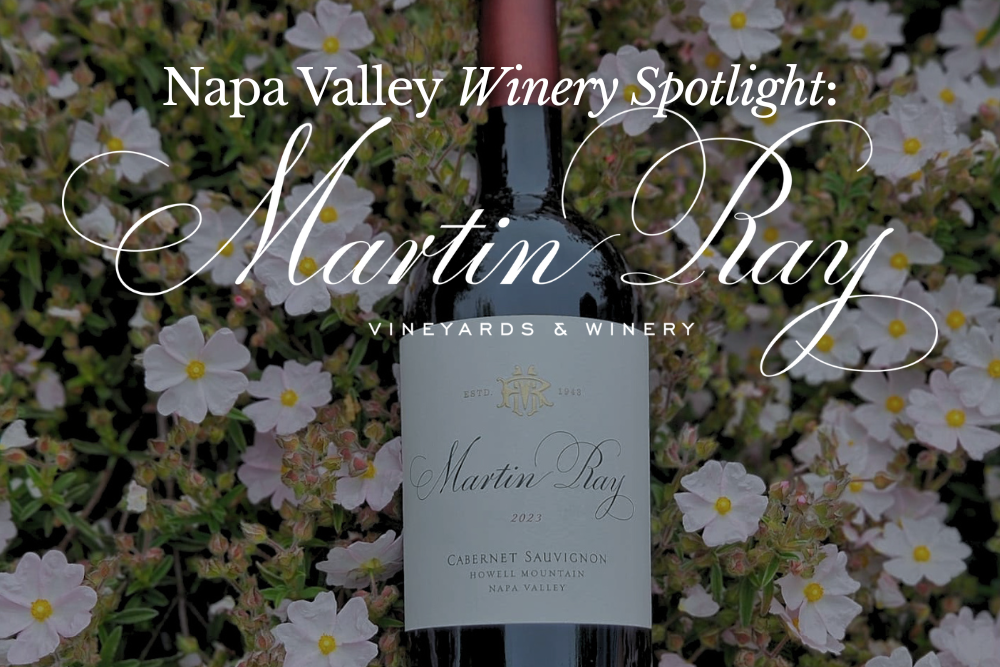
Ask an experienced Napa buyer what separates mountain Cabernet from valley-floor Cabernet, and you’ll likely get a confident answer: mountain fruit is smaller-berried, firmer, and more structured; valley-floor Cabernet is rounder, richer, and more immediately generous. It’s a useful distinction – but one that’s surprisingly difficult to test side by side. The mountain wine and valley-floor wine in front of you were usually made by different producers, with different intentions, in different cellars.
Change the producer, and you change the experiment.
Every so often, a collection comes along that holds those variables still: the same winery, the same grape, a similar vintage window, sourced from vineyards at dramatically different elevations. That’s when the comparison gets interesting. Not because it settles the mountain-versus-valley debate, but because it gives you a rare opportunity to taste the sites themselves and discover just how much elevation can shape Napa Cabernet.
Rutherford: The Valley Floor Benchmark
Rutherford sits on the Napa Valley floor, and it has spent decades as the reference point for what classically structured Napa Cabernet tastes like. The much-repeated phrase “Rutherford dust” is doing something real, even if nobody agrees precisely what: a fine, dry, dusty grip that shows up in the middle of the wine and gives it a spine without hardness.
Valley-floor sites here get deeper soils and warmer nights than the hillsides above them. The practical result is fruit that ripens generously and wines that tend to be approachable earlier – structured, but not demanding.
Howell Mountain and Mount Veeder: Above the Fog Line
Howell Mountain and Mount Veeder are mountain appellations, and they sit on opposite sides of the valley – Howell Mountain to the east, Mount Veeder in the Mayacamas to the west. Both share the general conditions that define Napa’s high-elevation sites: thinner, poorer soils, more sun exposure above the fog layer, and vines that struggle more than their valley counterparts.
Struggling vines make smaller berries. Smaller berries mean a higher ratio of skin to juice, and skin is where color, tannin and aromatic concentration live. That is the mechanism behind the reputation – mountain Cabernet is not “bigger” so much as denser, with tannins that arrive earlier in the palate and resolve more slowly in the cellar.
The two mountains are not interchangeable. In broad terms, Howell Mountain tends toward darker, plusher fruit; Mount Veeder toward a cooler, more savory, graphite-and-earth register. Whether that holds in a given vintage is exactly the sort of thing a side-by-side answers and a generalization cannot.
What the Critic Ratings Suggest
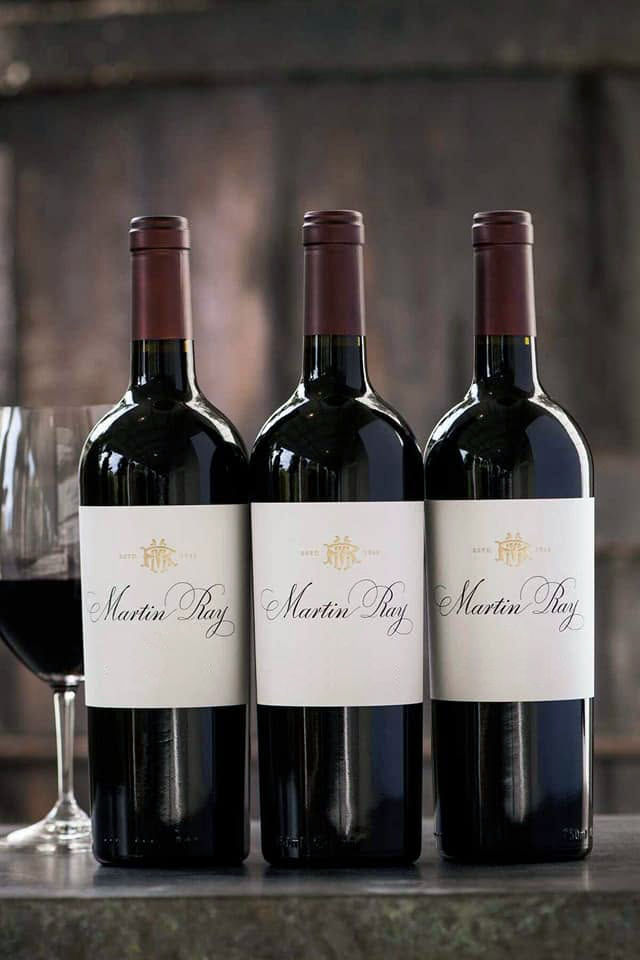
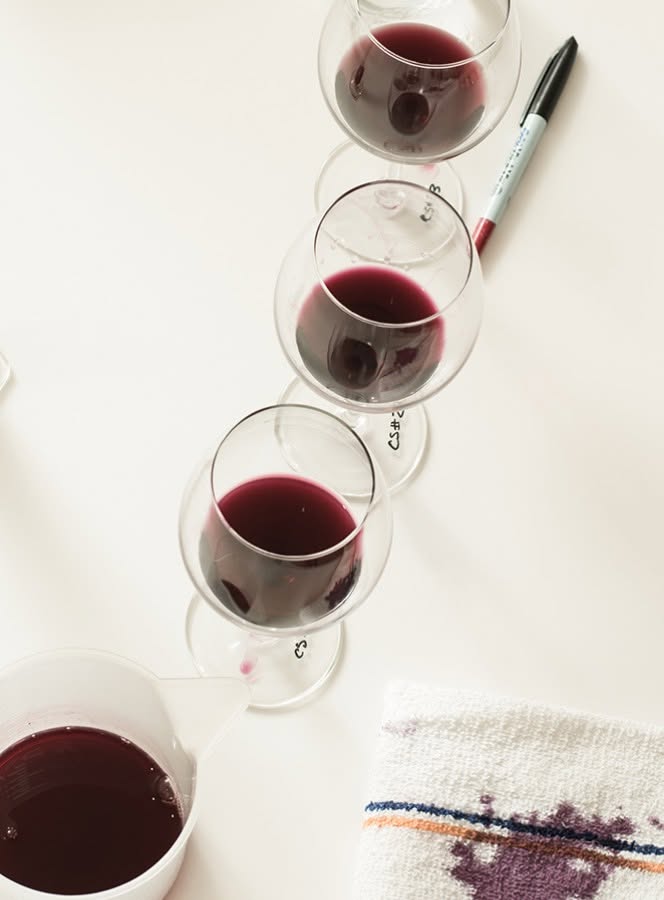
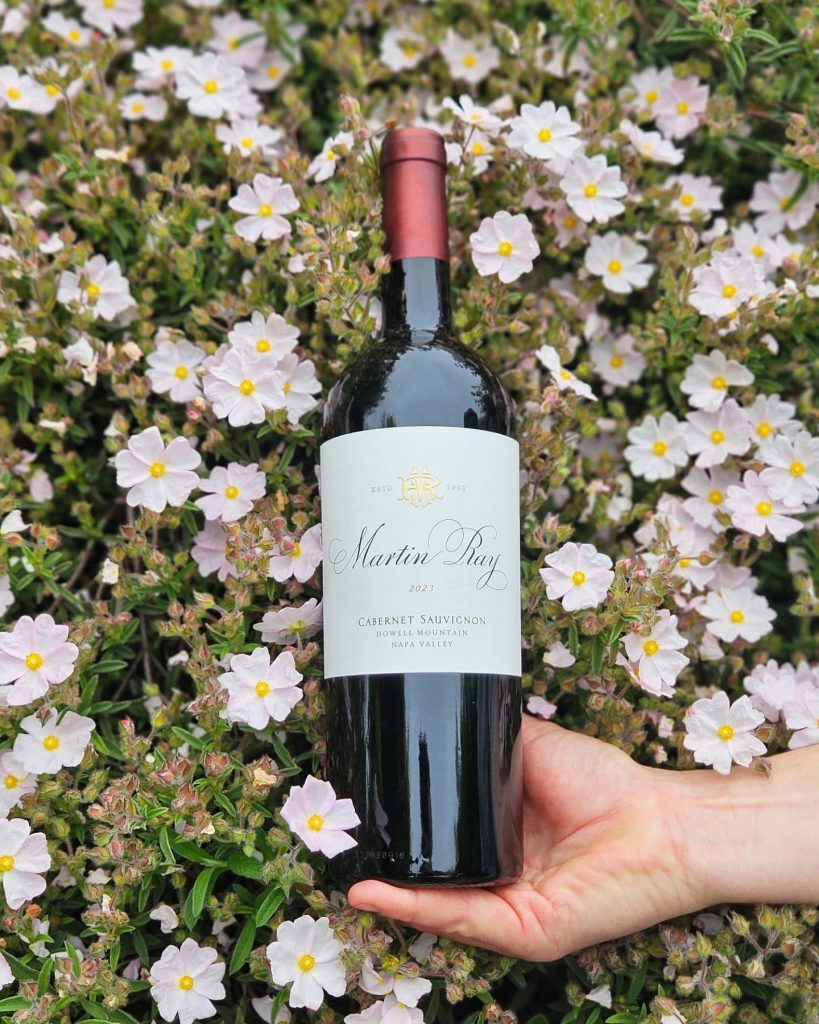
Now comes the opportunity to put that theory in the glass. The WTSO Winery Spotlight on Monday, August 24, features three Martin Ray Cabernet Sauvignons from Rutherford, Howell Mountain, and Mount Veeder, creating a side-by-side look at Napa from the valley floor to the mountains. James Suckling rated all three wines 94–96 Points, and his notes track the elevation story remarkably well.
Martin Ray Rutherford Cabernet Sauvignon 2022 – 94 Pts., James Suckling
“Aromas of terra cotta, pine needles, blackcurrants, red currants and some tree sap come through clearly. Medium-bodied with chewy tannins and an interesting resin undertone. Very spicy, savory and delicious. Drink or hold.”
Martin Ray Howell Mountain Cabernet Sauvignon 2023 – 96 Pts., James Suckling
“Aromas of blackberries, black currants and undertones of forest flowers, pine and spices, following through to a medium body with juicy fruit and creamy tannins. Dark fruit at the end. Tight. Drink or hold.”
Martin Ray Mount Veeder Cabernet Sauvignon 2023 – 96 Pts., James Suckling
“Aromas of black currants, bark and pine cones with graphite undertones follow through to a medium to full body with chewy tannins and cedar and dried earth undertones. It’s chewy and juicy in the finish. Drink in two or three years.”
Side by side, each Cabernet reveals a distinct sense of place.
The Rutherford leads with red fruit alongside the black – red currants beside blackcurrants – and with savory, resinous notes rather than sheer density. That is a valley-floor signature.
The Howell Mountain is the darkest and plushest of the three, and the word “tight” is doing real work: fruit that is generous now with structure still closing over it.
The Mount Veeder is the most obviously mountain wine of the set. Graphite, bark, cedar, dried earth – a mineral register rather than a fruit-forward one – and it is the only one of the three where the reviewer suggests waiting rather than drinking or holding.
Which to Open, Which to Put Away
Read the drinking guidance rather than the scores if you are deciding what to do with these.
The Rutherford is the natural first bottle. It is the most approachable of the three and the easiest to put on a table this month without feeling you have opened something early.
The Howell Mountain rewards either choice – there is enough fruit to enjoy it now, and enough structure to justify a few years.
The Mount Veeder is the cellar wine. “Drink in two or three years” is a specific instruction, and a wine described through graphite, cedar and dried earth is telling you it has not finished arriving.
One bottle offers a compelling expression of Napa Cabernet; all three create an experience. Taste Rutherford, Howell Mountain, and Mount Veeder side by side to explore how dramatically site and elevation can shape the same grape in the hands of one producer.
The Martin Ray Winery Spotlight Collection
Monday, August 24: Discover three distinct expressions of Napa Cabernet in our August 24 Winery Spotlight, featuring Martin Ray selections from Rutherford, Howell Mountain, and Mount Veeder – all new to WTSO.com. Save $10 at checkout every 6 bottles purchased.
is this a typo: What the Citic Ratings Suggest…or is it Critic?
Thank you for catching that typo, Mary!
Mountain cabs always!
Prefer fruit-forward, rich color and taste. Not too dry.
Tendency toward the Rutherford. Can I just buy that wine offer?
The most interesting Napa tasting I’ve had was at Conn Creek WInery maybe 15 years ago. The tasting room manager from Stag’s Leap Winery was staffing the tasting room that Monday, a young man who grew up in Napa and had worked a number of roles in the wine business. My wife & I opted for the Cabernet AVA tasting, which featured 5 cabs, one from Rutherford, one from Howell Mt, one from Mt Veeder, one from Atlas Peak, and one from Spring Mt. He even showed us soil samples from the different AVA to illustrate the differences. Best 90 minutes we spent in a long time We even got a taste of their 2010 Atlas Peak cab added on. Had to buy a few bottles of that gem. But my wife is now a near invalid, so travel is largely out of the question. Your Martin Ray offer sounds very intriguing. A way to let wines do the travelling for us. From a long time famous winemaker, Martin Ray, although better known for his Mountain winery above Silicon Valley.